BAH vs Rent: The Reality Check Every Military Family Needs Before Their Next PCS
BAH is built on median rents, not your actual situation. What every military family should know about the gap before they sign a lease far from base.
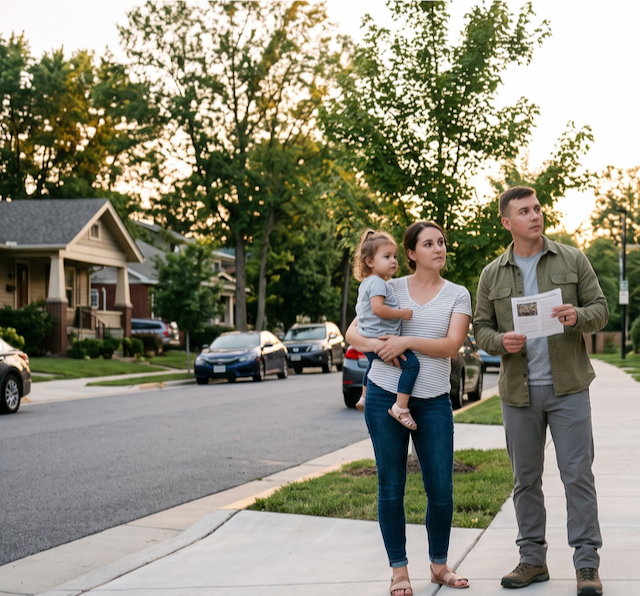
The orders dropped. You have a report date, a destination, and about a thousand questions running through your head all at once. But the one that keeps you up at night is the one nobody really prepares you for.
Will my BAH actually cover rent where we are going?
It sounds like it should be simple. The military calculates your Basic Allowance for Housing based on your rank and your dependent status. It is supposed to reflect the cost of housing in your new area. In theory, it covers you. In reality, the gap between what BAH says housing costs and what landlords are actually charging can hit military families hard, especially during peak PCS season when competition for rental units near base is at its highest.
Here is what I have learned across four PCS moves, and what every military family deserves to know before they sign a lease from hundreds of miles away.
BAH Is Calculated on Median Costs, Not Your Actual Situation
The Department of Defense sets BAH rates using surveys of rental costs in a given area. The number they land on is designed to cover median housing costs for your pay grade. That sounds fair until you realize a few things.
Median means half the rentals in the area cost more. If you have three kids and need a three bedroom home within a reasonable commute of the installation, you are often not shopping in the median range. You are shopping at the higher end, and BAH may not stretch that far.
Rates are also updated annually, but the rental market moves faster than the survey cycle. In high demand military towns, rents can spike significantly in the months between when BAH rates are set and when your family actually arrives.
The Hidden Costs BAH Was Never Meant to Cover
Even when BAH technically covers your base rent, military families frequently run into expenses that eat into that allowance before the month is over.
Pet deposits and monthly pet fees are rarely factored in but are a reality for the majority of military families who move with animals. Application fees, move-in fees, and first and last month requirements can create a significant upfront cash gap even when the monthly rent itself looks manageable. Utilities in some markets are not included in rent, and in older housing stock near certain installations, those costs can be substantial.
None of these show up in a BAH calculation. All of them show up on your bank statement.
Location Within the Area Matters More Than People Realize
BAH covers a geographic area, not a specific neighborhood. Two rentals with identical square footage in the same metro area can differ by four or five hundred dollars a month depending on how close they are to base, what school district they fall in, and how new the construction is.
Families who do not have time to research neighborhoods in depth before signing a lease often end up either paying significantly over BAH for a home in a convenient location, or saving on rent only to spend the difference on a long commute or a school situation that does not work for their kids.
This is where doing your homework early makes an enormous difference.
What You Can Actually Do About It
The families who navigate BAH vs rent most successfully are the ones who start their research early, go deeper than a quick Google search, and use tools built specifically for military relocation.
HomeScoop was built for exactly this moment. Before you ever step foot in your new city, you can compare your BAH rate directly against actual rental costs in the neighborhoods surrounding your installation. You can see school ratings, commute times to the gate, and local vendor information all in one place, so you are not piecing together information from a dozen different Facebook groups and hoping it is accurate.
The PCS toolkit walks you through the financial picture in a way that accounts for the real costs, not just the rent line on a lease. And the neighborhood intelligence gives you the kind of granular local knowledge that usually only comes from someone who already lives there.
A Word to Families Choosing a Neighborhood Right Now
If you just got orders and you are in the middle of this right now, here is the most important thing I can tell you from personal experience.
Do not let the BAH number make the decision for you. Use it as a starting point, not a ceiling. Research what your rank actually rents in the specific neighborhoods you are considering. Factor in the full cost of living there, not just the monthly rent. And give yourself the benefit of real data before you commit to a lease you will be living in for the next two or three years.
You deserve to make that decision with full information. That is what HomeScoop is here for.
Konrad Johanna is a contributing writer at HomeScoop and an Army spouse who has navigated four PCS moves firsthand. HomeScoop helps military families make confident housing decisions with real neighborhood data, BAH comparisons, school ratings, and a full PCS toolkit built for the way military families actually move.
Ready to see how your BAH stacks up in your next duty station? Start your search at HomeScoop.The orders dropped. You have a report date, a destination, and about a thousand questions running through your head all at once. But the one that keeps you up at night is the one nobody really prepares you for.
Will my BAH actually cover rent where we are going?
It sounds like it should be simple. The military calculates your Basic Allowance for Housing based on your rank and your dependent status. It is supposed to reflect the cost of housing in your new area. In theory, it covers you. In reality, the gap between what BAH says housing costs and what landlords are actually charging can hit military families hard, especially during peak PCS season when competition for rental units near base is at its highest.
Here is what I have learned across four PCS moves, and what every military family deserves to know before they sign a lease from hundreds of miles away.
BAH Is Calculated on Median Costs, Not Your Actual Situation
The Department of Defense sets BAH rates using surveys of rental costs in a given area. The number they land on is designed to cover median housing costs for your pay grade. That sounds fair until you realize a few things.
Median means half the rentals in the area cost more. If you have three kids and need a three bedroom home within a reasonable commute of the installation, you are often not shopping in the median range. You are shopping at the higher end, and BAH may not stretch that far.
Rates are also updated annually, but the rental market moves faster than the survey cycle. In high demand military towns, rents can spike significantly in the months between when BAH rates are set and when your family actually arrives.
The Hidden Costs BAH Was Never Meant to Cover
Even when BAH technically covers your base rent, military families frequently run into expenses that eat into that allowance before the month is over.
Pet deposits and monthly pet fees are rarely factored in but are a reality for the majority of military families who move with animals. Application fees, move-in fees, and first and last month requirements can create a significant upfront cash gap even when the monthly rent itself looks manageable. Utilities in some markets are not included in rent, and in older housing stock near certain installations, those costs can be substantial.
None of these show up in a BAH calculation. All of them show up on your bank statement.
Location Within the Area Matters More Than People Realize
BAH covers a geographic area, not a specific neighborhood. Two rentals with identical square footage in the same metro area can differ by four or five hundred dollars a month depending on how close they are to base, what school district they fall in, and how new the construction is.
Families who do not have time to research neighborhoods in depth before signing a lease often end up either paying significantly over BAH for a home in a convenient location, or saving on rent only to spend the difference on a long commute or a school situation that does not work for their kids.
This is where doing your homework early makes an enormous difference.
What You Can Actually Do About It
The families who navigate BAH vs rent most successfully are the ones who start their research early, go deeper than a quick Google search, and use tools built specifically for military relocation.
HomeScoop was built for exactly this moment. Before you ever step foot in your new city, you can compare your BAH rate directly against actual rental costs in the neighborhoods surrounding your installation. You can see school ratings, commute times to the gate, and local vendor information all in one place, so you are not piecing together information from a dozen different Facebook groups and hoping it is accurate.
The PCS toolkit walks you through the financial picture in a way that accounts for the real costs, not just the rent line on a lease. And the neighborhood intelligence gives you the kind of granular local knowledge that usually only comes from someone who already lives there.
A Word to Families Choosing a Neighborhood Right Now
If you just got orders and you are in the middle of this right now, here is the most important thing I can tell you from personal experience.
Do not let the BAH number make the decision for you. Use it as a starting point, not a ceiling. Research what your rank actually rents in the specific neighborhoods you are considering. Factor in the full cost of living there, not just the monthly rent. And give yourself the benefit of real data before you commit to a lease you will be living in for the next two or three years.
You deserve to make that decision with full information. That is what HomeScoop is here for.
Start planning your next move at https://homescoop.app/?utm_source=konrad&utm_medium=social&utm_campaign=ambassadors
Konrad Johanna is a contributing writer at HomeScoop and an Army spouse who has navigated four PCS moves firsthand.